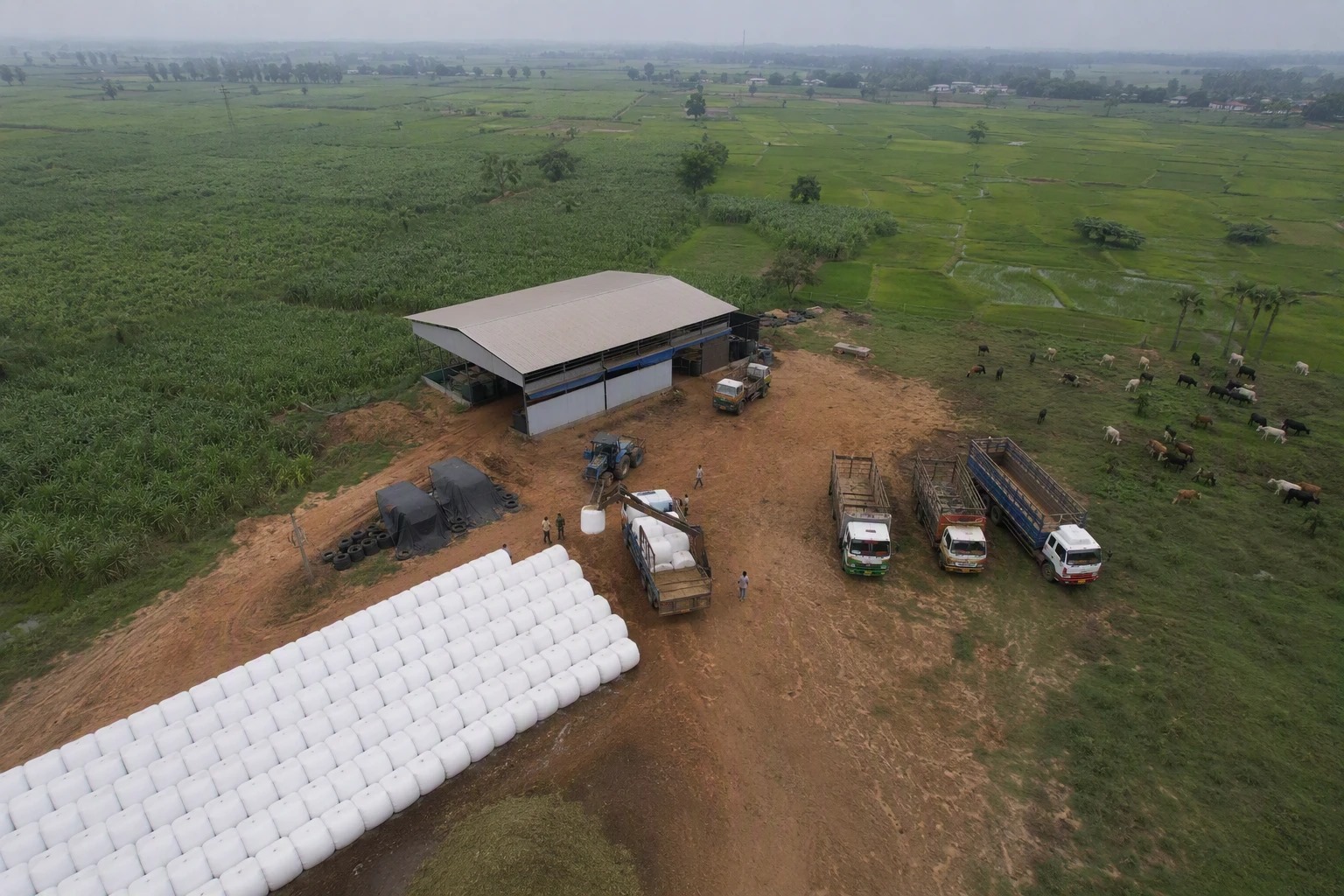
How it works
One resource stream, three outputs.
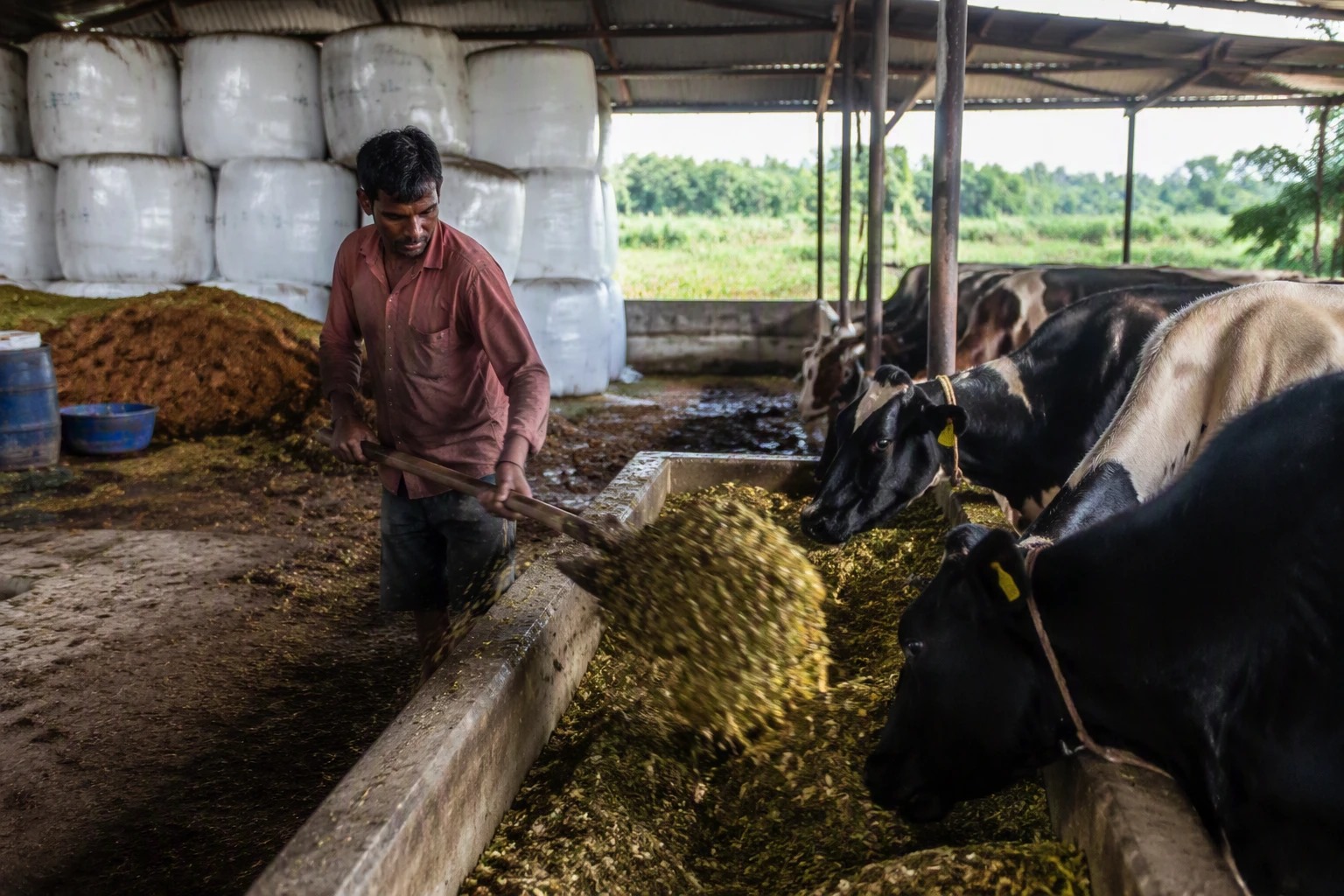
TMR Manufacturing
Formulated ration sold daily to dairy farms and cooperatives — the anchor engine, built on daily, non-discretionary demand.
- Payback depends on plant capacity, ration price, feed costs and herd density
- We model it for your site and your numbers, not a generic average
- Read the economics behind it: the ICAR feed chart, explained
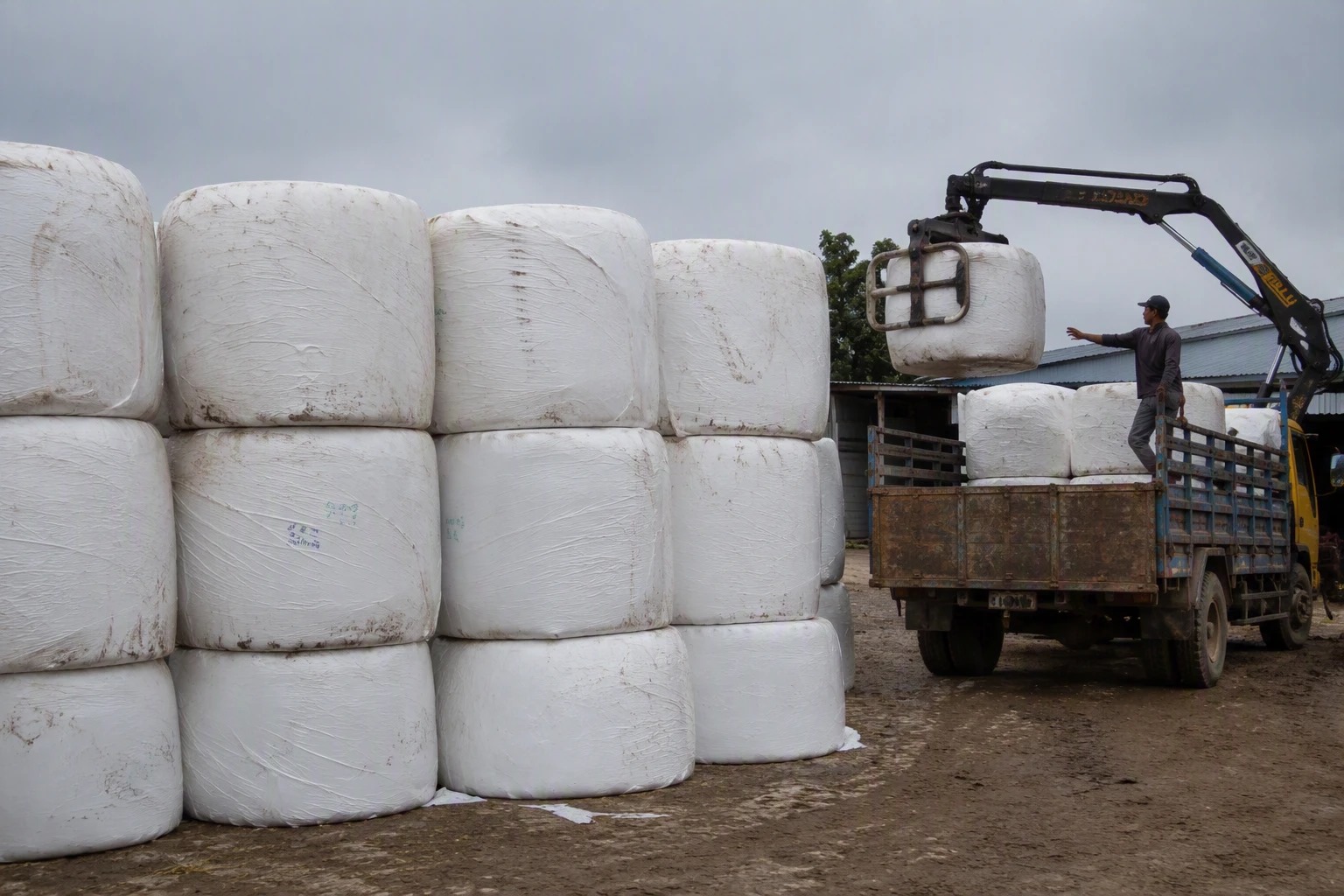
Merchant Silage Supply
Preserved fodder sold to farms and TMR operators who lack their own production — pure incremental revenue.
- Sold to farms without their own TMR line
- Same silage stream that feeds Engine 1
- Extends supply through the dry season
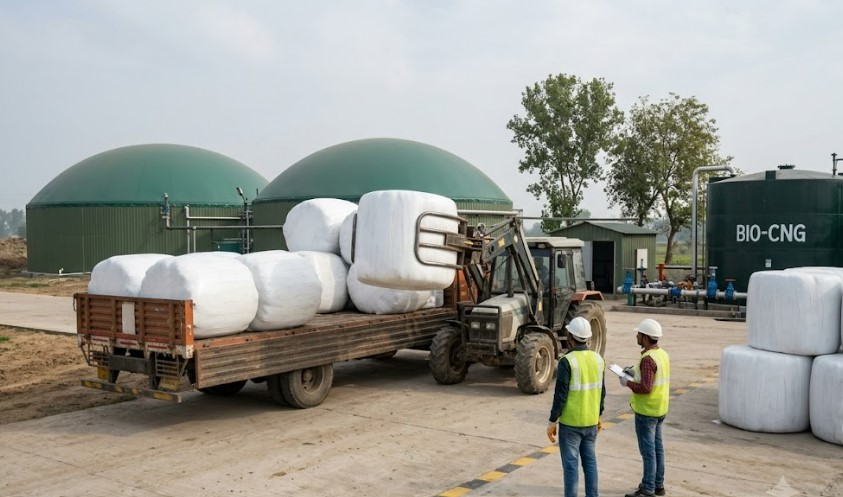
Bio‑CNG Substrate Aggregation
Residue and surplus biomass, aggregated and supplied to CBG plants as feedstock — backed by GOBARdhan, the ₹23,731 crore national programme that now includes SATAT.
- GOBARdhan outlay of ₹23,731 crore, FY2026-27 to FY2035-36
- CBG blending obligation of 3% rising to 5% by FY2028-29
- Details for developers: GOBARdhan 2026, explained
The transformation
Today. Tomorrow.
Fragmented fodder supply — seasonal availability, price volatility.
Reliable fodder ecosystem — contract farming, assured supply, quality raw material.
Nutrition gaps — inconsistent feed quality and productivity.
Better nutrition, higher productivity — balanced TMR and silage improve milk yield and animal health.
Crop residue underutilised — burned, wasted, no economic value.
Residue to revenue — crop residue converted into Bio-CNG substrate.
Limited farmer income — lower productivity, higher input cost.
Stronger farmer, stronger business — higher farmer income, sustainable growth.
Create value. Empower farmers. Drive sustainable growth.